



Energy Conservation and Audit: Complete Guide to Saving Energy
Energy costs are one of the biggest operating expenses for any industrial or commercial facility. Yet most facility managers do not have a clear picture of where that energy is going or how much of it is being wasted.
This is where energy conservation and audit comes in. Together, these two practices help facilities measure their energy use, identify waste, and take practical steps to reduce consumption and cost over the long term.
This guide covers what energy conservation and audit mean, how they work together, the types of energy audit, the process, the report, and the benefits for industrial facilities.
What Are Energy Conservation and Energy Audit?
Energy conservation and audit are two closely related practices that help industries reduce energy consumption and improve efficiency. Energy conservation means using energy more efficiently by reducing waste without affecting productivity or comfort. It includes measures such as optimizing equipment, improving lighting systems, and reducing unnecessary power use.
An energy audit is a systematic assessment of how energy is used within a facility. It identifies areas where energy is being wasted and recommends practical ways to improve performance and lower operating costs.
In simple terms, an energy audit provides the data and insights, while energy conservation is the action taken based on those findings. Together, they help businesses save energy, reduce costs, and support long-term sustainability.
Difference Between Energy Conservation and Energy Audit
These two terms are related but they are not the same thing.
| Energy Conservation | Energy Audit | |
|---|---|---|
| What it is | Actions taken to reduce energy use | A study that identifies where energy is wasted |
| When it happens | Ongoing, daily operations | Periodic, once every 1 to 3 years |
| Who does it | Facility team | Certified energy auditor |
| Output | Lower energy consumption | Detailed audit report with recommendations |
| Relationship | The goal | The tool that helps you reach the goal |
The simplest way to understand the relationship: an energy audit tells you what to do, and energy conservation is what you do after the audit.
You cannot conserve energy effectively without first knowing where the waste is. And an audit without follow-up action is just a report sitting on a shelf.
Types of Energy Audit

There are three main types of energy audit used for industrial and commercial facilities:
Preliminary Energy Audit (Walk-Through Audit)
A preliminary energy audit is a quick, high-level assessment. An auditor walks through the facility, visually inspects major equipment, reviews utility bills for the past 12 months, and identifies obvious areas of waste.
This type takes 1 to 2 days and gives a rough estimate of potential savings. It is useful when a company wants a fast overview before committing to a full study.
Detailed Energy Audit (General Energy Audit)
A detailed energy audit is a full measurement-based study. Auditors use instruments to measure energy consumption at individual equipment level, motors, drives, HVAC systems, lighting, and compressed air.
Data is collected over several days and analysed carefully to produce accurate savings estimates with specific, costed recommendations. This is the most commonly used type for manufacturing plants, hospitals, hotels, and commercial buildings.
Investment Grade Energy Audit
An investment grade energy audit is the most thorough level. It includes everything in a detailed audit plus a complete financial analysis, capital cost of each recommendation, payback period, ROI calculation, and sensitivity analysis.
Banks and investors require this level before approving funding for large energy efficiency projects or retrofits.
The Energy Audit Process — Step by Step
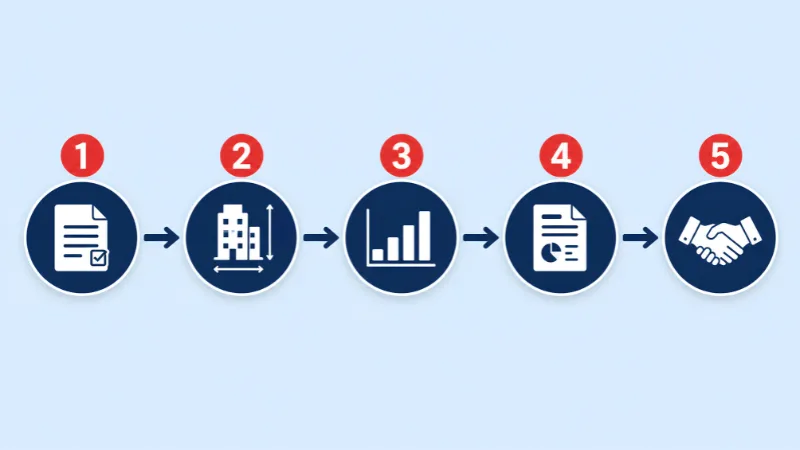
A typical energy conservation and audit process for an industrial facility follows these steps:
Step 1: Pre-Audit Data Collection
The audit team collects 12 months of utility bills, production records, equipment lists, and existing maintenance records before visiting the site. This gives the auditor a baseline picture of energy consumption patterns.
Step 2: Site Visit and Measurement
Auditors visit the facility and use calibrated energy audit instruments to measure consumption at each load point. Key instruments include:
- Power analyzer: measures real power, reactive power, power factor, and harmonics
- Thermal imaging camera: identifies heat losses in motors, panels, and building fabric
- Ultrasonic leak detector: finds compressed air and steam leaks
- Clamp meter: measures current draw at individual motors
- Data logger: records consumption over time to capture shift-by-shift load patterns
- Lux meter: measures lighting levels against BEE norms
Step 3: Data Analysis
Collected data is analysed to calculate actual efficiency levels, compare against benchmarks, and quantify the energy and cost savings available from each improvement opportunity. Benchmarking in energy audit is a key part of this step — comparing your facility’s performance against industry norms helps identify which systems are performing poorly relative to similar facilities.
Step 4: Report Preparation
Findings are compiled into a structured energy audit report with clear recommendations, financial analysis, and an implementation roadmap.
Step 5: Presentation and Implementation Support
The audit team presents findings to management and supports the facility in prioritizing and implementing the recommended measures.
What Does an Energy Audit Report Include?
The energy audit report is the main deliverable of the audit process. A well-prepared energy audit report format includes:
Executive summary: total estimated savings in units and rupees per year, and the top 5 recommendations ranked by impact.
Facility energy profile: current consumption by fuel type, production data, and utility cost history.
Energy consumption breakdown: where energy is going across all systems, motors, HVAC, lighting, compressed air, process equipment, and utilities.
Findings and recommendations: specific list of energy saving opportunities with estimated savings for each.
Financial analysis: for every recommendation: annual energy saved, cost of implementation, annual rupee savings, and simple payback period.
Implementation roadmap: phased plan showing which measures to implement first for maximum impact at lowest cost.
The report follows BEE guidelines and is suitable for submission to banks, government energy efficiency schemes, and internal management approval.
Benefits of Energy Audit for Industrial Facilities
The advantages of energy audit go beyond just cutting the electricity bill:
- Lower Energy Costs: Identifies areas of energy waste and recommends measures to reduce electricity consumption.
- Improved Equipment Efficiency: Helps machines, motors, HVAC systems, and other equipment operate more efficiently.
- Reduced Maintenance Costs: Efficiently running equipment experiences less wear, resulting in fewer breakdowns and repairs.
- Better Energy Management: Provides accurate data for planning, monitoring, and improving energy performance.
- Support for Sustainability Goals: Reduces energy consumption and carbon emissions while helping organizations meet regulatory and environmental requirements.
Energy Conservation and Audit — Who Should Do It?
Any facility that pays a significant monthly electricity bill should consider a periodic energy conservation and audit programme.
It is particularly valuable for:
- Manufacturing plants can improve operational efficiency through regular audits and by integrating PLC control panels for better monitoring and process control.
- Hospitals and healthcare facilities where HVAC runs 24 hours a day
- Hotels and commercial buildings with high cooling and lighting loads
- Water treatment and pumping stations with large pump loads
- Data centres and IT facilities with continuous cooling requirements
For industrial energy audit specifically, BEE mandates that designated consumers, facilities consuming above 500 MTOE (metric tonnes of oil equivalent) per year, must conduct an energy audit every 3 years through a BEE-certified auditor.
Even for facilities below the mandatory threshold, a voluntary audit typically pays back its cost within 6 to 18 months through energy savings.
Frequently Asked Questions
Energy conservation is the set of actions taken to reduce energy use. An energy audit is the study that identifies where energy is being wasted and what actions will have the most impact. The audit comes first, it tells you what to fix. Conservation is what happens after you fix it.
The three types are the preliminary walk-through audit, the detailed general audit, and the investment grade audit. Each is progressively more detailed. Most industrial facilities use the detailed audit as it provides accurate savings estimates with specific recommendations and payback analysis.
BEE regulations require designated consumers to audit every 3 years. Most facilities benefit from a detailed audit every 2 to 3 years.
Power analysers, thermal cameras, ultrasonic leak detectors, clamp meters, data loggers, lux meters, and flow meters are standard energy audit instruments.
A preliminary audit takes 1 to 2 days. A detailed audit for a medium-sized industrial facility typically takes 3 to 7 days of on-site measurement plus 2 to 3 weeks for data analysis and report preparation.
Energy Audit Services by Adhunik Automation
Adhunik Automation conducts energy conservation and audit programmes for industrial plants, commercial buildings, hospitals, and water treatment facilities across Delhi NCR, Noida, Ghaziabad, Faridabad, and Gurugram.
Our certified auditors use calibrated instruments, follow BEE guidelines, and deliver clear, actionable audit reports. We also support implementation, from VFD installation and controls upgrades to full project management of energy efficiency improvements.
If your facility has not had an energy audit in the past 3 years, contact our team for a free initial consultation.
Call: +91 93100 85027
Email: kaushik@adhunikautomation.com